
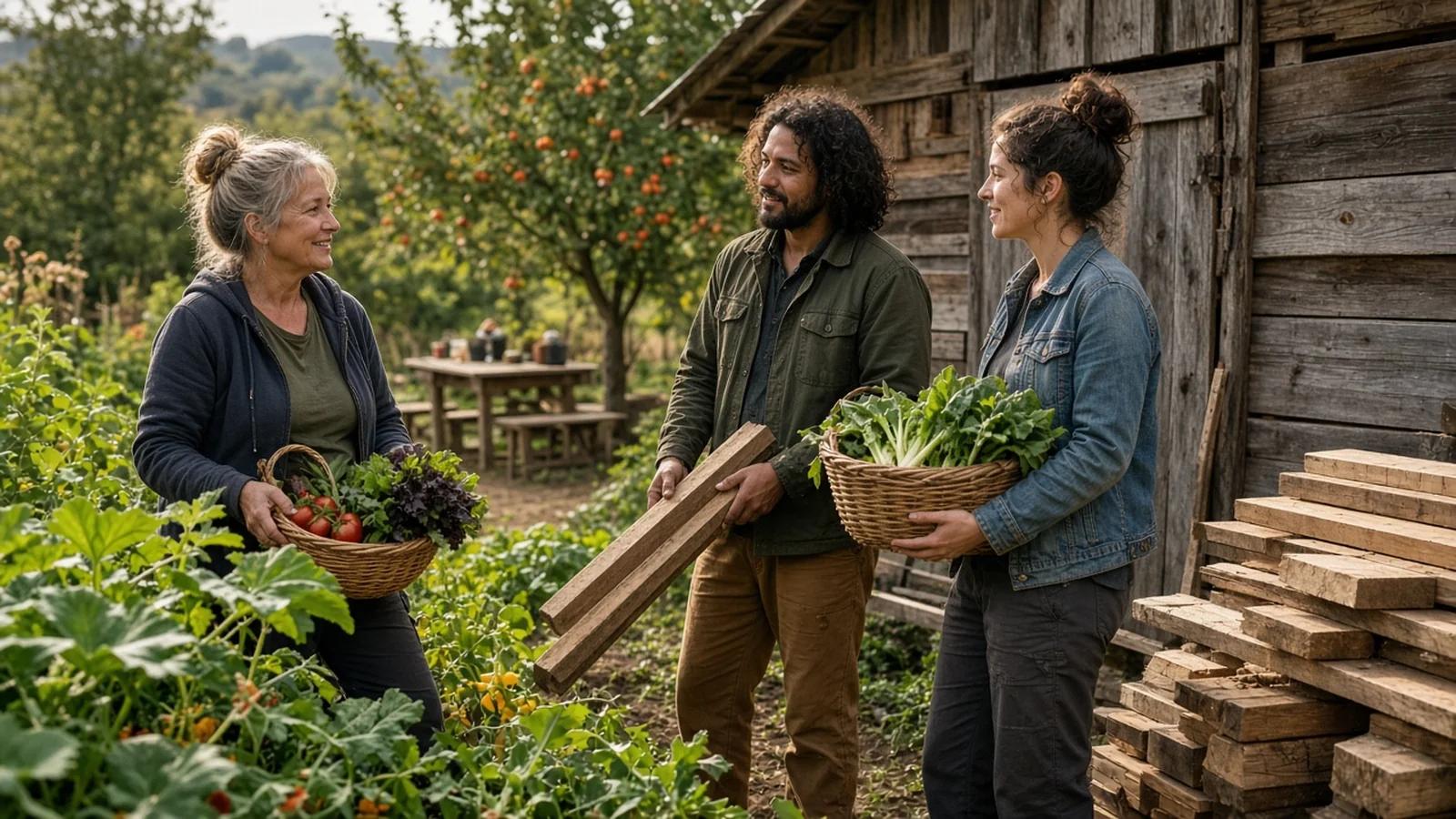
Going off grid alone is hard. Land, water systems, solar, food, building and childcare are a lot for one household. Many people find that sharing land, tools and work with others makes a regenerative life far more doable, and far less lonely.
This guide covers the three main kinds of shared-living groups in the U.S., where their official directories are, and how to vet a community before you commit your savings or your time.
Three kinds of community, and how they differ
- Intentional community is the broad term for people who choose to live together around shared values or goals. It covers everything from rural land co-ops and homesteads to urban shared houses. The Foundation for Intentional Community (FIC) separates communities, which it defines as residential projects where people live as their primary home, from organizations like learning centers or farms where no one lives full time.
- Ecovillage is a community designed around ecological goals as well as social ones. The Global Ecovillage Network (GEN), founded in 1995, lists more than 450 ecovillages in its network, with a regional node for North America (GENNA).
- Cohousing is a specific design. The National Cohousing Alliance (formerly the Cohousing Association of the United States) defines it as "an intentional community that combines private homes with shared indoor and outdoor spaces, designed to support connection, collaboration, and interdependent community life." Households own or rent their own homes and share a common house, gardens and often meals.
For off-grid living, rural intentional communities and ecovillages are the closest fit. Cohousing tends to be more suburban or urban, but some groups build on rural land with shared energy and water systems.
Where to look
Start with the directories run by the networks themselves:
- FIC Directory, the largest listing of intentional communities. You can filter by location and see whether a group is accepting new members or open to visitors. Registering a forming community is free.
- Global Ecovillage Network, with an ecovillage map and resources from the global movement.
- National Cohousing Alliance, which lists existing communities and forming groups and hosts a free monthly online gathering, "The Commons," for people exploring cohousing.
Forming groups are worth a look too. Joining early gives you more say in the land, the buildings and the rules, but it also means more risk and more meetings.
Questions to ask before you visit
Most communities ask you to visit before you join, often for a set visitor period. Go with a list:
- How are decisions made? Consensus, sociocracy, majority vote, or a founder? Ask to sit in on a meeting.
- Who owns the land, and how? A land trust, a co-op, an LLC, a nonprofit, or one owner who rents? What happens to your investment if you leave?
- What does it cost? Ask for the joining fee, monthly dues, labor expectations and any buy-in, in writing.
- What are the shared systems? Water rights, wells, solar, septic or composting toilets, roads. Who maintains them, and who pays when they break?
- What's expected of members? Work hours, shared meals, meeting attendance.
- How are conflicts handled? Is there a written process? Has it been used?
- What's the legal and zoning status? Are the homes permitted? Is the land zoned for the number of dwellings on it?
- How long have current members stayed? High turnover is a warning sign worth asking about.
Before you put money in, have the governing documents and any purchase or membership agreement reviewed by a lawyer in that state.
Starting your own
If you can't find the right group, you may end up forming one. That's a much bigger project, with land, legal structure, finances and group dynamics all at once. The book most often recommended for it is Diana Leafe Christian's Creating a Life Together, below.
What to read next
These books in our Regenerative Library cover finding, joining and founding a community:
- Finding Community by Diana Leafe Christian, a guide to researching, visiting and joining an existing intentional community.
- Creating a Life Together by Diana Leafe Christian, practical tools for starting an ecovillage or intentional community, from vision and decision-making to land and legal structures.
For more planning steps and expert videos, see the Community hub.
Sources
- Foundation for Intentional Community. "Directories." ic.org
- Global Ecovillage Network. "About Us." ecovillage.org
- National Cohousing Alliance (formerly Cohousing Association of the United States). cohousing.org