
If you live off-grid, odds are you live where the fire trucks are far away. That makes the house itself, and the ground right around it, your first line of defense.
Most wildfire advice boils down to two jobs: harden the house (fire-resistant roof, siding, vents, windows and eaves) and clear defensible space around it. Both get repeated so often that it's fair to ask how much they actually help, and which matters most.
A 2025 study in Nature Communications tried to put numbers on that, using CAL FIRE damage records from five of California's most destructive wildfires. A newer post-fire investigation of the 2025 Los Angeles fires by the Insurance Institute for Business & Home Safety (IBHS) points the same way. Here's what each found, where the evidence is thin, and what it means for a rural homestead.
The study in one paragraph
Who and what: researchers from UC Berkeley, the University of Maryland, Universidad Técnica Federico Santa María and CloudFire combined CAL FIRE's Damage INSpection (DINS) records with satellite and LiDAR vegetation data, building footprints, and computer reconstructions of flame and ember exposure. They focused on five fires: 2017 Tubbs, 2017 Thomas, 2018 Camp, 2019 Kincade and 2020 Glass. After adding unburned-but-exposed structures and balancing the data, the analysis covered about 47,000 structures.
The method: they trained machine-learning models (the best was an XGBoost classifier) to predict whether each structure survived or was destroyed, then asked which features drove those predictions. The model was right about 82% of the time on held-out test data from the five fires combined.
Study type: a peer-reviewed, open-access paper (Zamanialaei et al., Nature Communications, published August 28, 2025). It's an observational, model-based study. That means it finds patterns in what burned and what didn't, and its "what if" mitigation results are simulations, not a controlled experiment.
What they found
1. Distance between buildings was the strongest predictor. Structure separation distance came out as the single most important feature across all five fires combined, followed by exterior siding and the year the house was built. In four of the five fires, spacing ranked first. The authors explain that once a wildfire reaches a neighborhood, houses become fuel themselves and fire spreads house to house.
2. Exposure mattered, especially in the sparser fire. In the Tubbs Fire, flame length (how intense the fire was next to the structure) was the top predictor instead of spacing. The authors note that sparser structures there "could potentially have benefited from additional fuel management." Overall, structures that survived had faced about 27% lower flame exposure and 39% lower ember exposure than those that were damaged.
3. Year built is a stand-in, not a cause. Newer homes tended to fare better, but the authors warn that year built bundles together building codes, materials, vegetation and neighbors, so it shouldn't be read as a single factor on its own.
4. Hardening plus a cleared Zone 0 did the most in the model. The team re-ran their model as if every structure had been upgraded:
| Simulated scenario (all ~47,000 structures) | Predicted survival | Predicted loss |
|---|---|---|
| Home hardening only (noncombustible siding and roof, fine mesh over vents, double-pane windows, etc.) | 25% | 75% |
| Hardening + clearing Zone 0 (0-5 feet from the house) | 40% | 60% |
| Hardening + clearing Zone 0 and Zone 1 (out to 30 feet) | 48% | 52% |
The authors describe the most important lesson as making changes to both the structure and the fuels around it, especially vegetation and other flammable materials within 5 feet of the house. They're also blunt that these are "theoretical estimates": the scenarios ignore firefighting, and real outcomes could differ considerably.
The LA fires pointed the same way
IBHS investigators assessed 252 structures in the Eaton and Palisades Fires in January 2025 and combined that with CAL FIRE damage data on more than 30,000 structures. Their report, released December 10, 2025, is an industry research report, not a peer-reviewed paper, but its findings line up:
- Homes with four hardening features (Class A roof, noncombustible siding, double-pane windows and enclosed eaves) had a 54% likelihood of no damage, versus 36% with only one or two.
- When more than 25% of Zone 0 was covered in combustible fuel, the chance of damage or destruction rose to 87-100%.
- Hot tubs, patio furniture, trash bins, combustible decks and pergolas next to the house repeatedly acted as "connective fuels" that carried fire to vulnerable parts of the building.
- In a separate set of 17 experiments, IBHS found that vegetation within the first five feet of a home increased heat exposure and could amplify damage even when the plants were well-watered.
What it means for an off-grid homestead
These studies were mostly about suburban and small-town neighborhoods, not isolated homesteads, so read them as evidence about how houses burn rather than a forecast for your property. With that caveat, a few lessons carry over.
1. On a rural property, your own house and yard matter more. The biggest risk factor in the study, house-to-house spacing, is usually not your problem on acreage. That leaves the factors you control: the materials on the outside of your home and the fuel right next to it. The Tubbs result, where flame exposure outranked spacing, is a reminder that fuel management counts where buildings are spread out.
2. Treat hardening as a system, not a single upgrade. Both studies point to combinations. A metal roof with open eaves, plastic vent screens and a wooden deck piled with gear still leaves easy ways in. CAL FIRE's guidance lists the weak spots: roof, vents, windows, siding, decks, eaves, gutters and fences that touch the house.
3. Start with the first five feet. In the model, clearing Zone 0 on top of hardening raised predicted survival from 25% to 40%, the biggest single step in the table. On a homestead, Zone 0 is where things pile up. IBHS named trash bins, furniture and decks; by the same logic, we'd move firewood stacks, fuel cans and stored lumber away from the walls too. Swap mulch and shrubs against the foundation for gravel or bare soil.
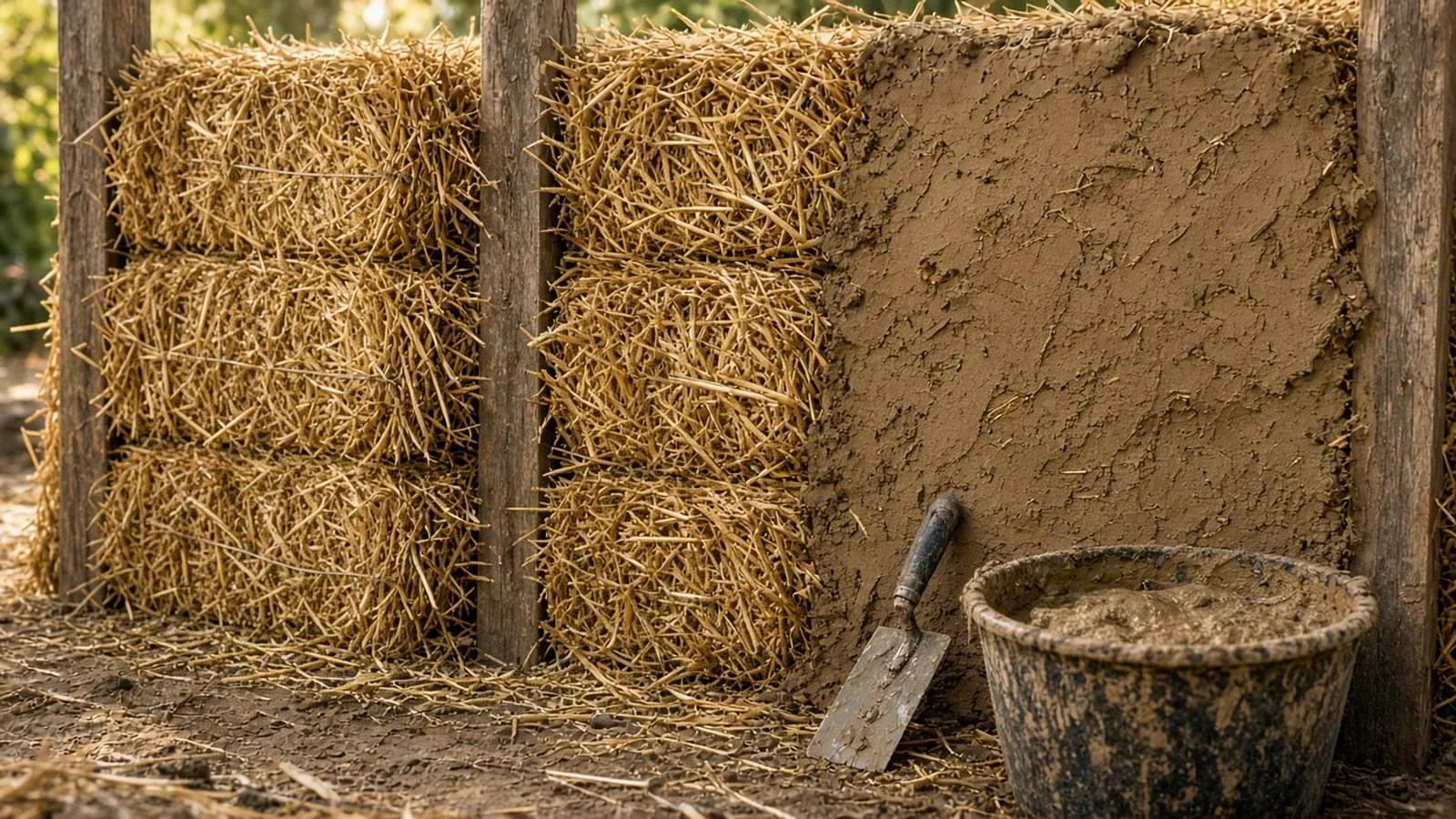
4. Vents are cheap to fix. CAL FIRE recommends covering vents with 1/16-inch to 1/8-inch noncombustible, corrosion-resistant metal mesh, and warns against fiberglass or plastic mesh, which can melt. It also notes that finer mesh can cut attic and crawlspace airflow, so check ventilation rules with your local building official. If you build with natural materials, our straw bale building code guide covers how the code handles plaster and fire ratings.
5. Plan your water and power for fire season. CAL FIRE suggests hoses that can reach the roof and deck, and pumps for wells or pools. If your water comes from a well, a solar well pump keeps running when the grid is cut off, and the Shelter hub covers the rest of the building as a system.
What's still unproven
- Simulated, not measured. The 25%, 40% and 48% survival figures come from re-running a model, not from upgraded houses in a real fire, and they leave out firefighting.
- Patchy vegetation data. Defensible space was estimated from satellite and LiDAR imagery, which can miss small fuels. Vegetation-distance values were available for only 3,504 records; the rest were filled in statistically. Building features were recorded for 19,318 structures.
- Post-fire inspections. Crews record features after the fire, when they are hard to judge, and the data doesn't capture things like suppression efforts or how well people prepared.
- California suburbs and towns. All five fires and the LA fires were in California, mostly in moderately dense communities. Results may not transfer to forested ranches in Montana or grassland in Texas.
- IBHS isn't peer-reviewed. Its LA numbers come from 252 structures assessed in one week, and IBHS says the effect of a fully noncombustible Zone 0 couldn't be fully assessed because effectively none of the inspected homes had one.
What to use or try
- Metal mesh for your vents. PS Direct 1/8-inch galvanized hardware cloth is a 36-inch by 10-foot roll of 27-gauge galvanized steel mesh with 1/8-inch openings, at the coarse end of CAL FIRE's recommended range. Cut it to fit attic, gable and crawlspace vents. Fasten it with screws and a strip of metal rather than staples alone, and check your local ventilation rules first. For new builds, CAL FIRE recommends State Fire Marshal-listed ember-resistant vents instead.
- A plan for the land around the house. Firescaping: Protecting Your Home with a Fire-Resistant Landscape by land-management expert Douglas Kent (2nd edition, Wilderness Press, 2019) walks through designing a fire-resistant landscape, which is the defensible-space half of what this research says matters.
Sources
- Zamanialaei, M., San Martin, D., Theodori, M., Purnomo, D. M. J., Tohidi, A., Lautenberger, C., Qin, Y., Trouvé, A., & Gollner, M. (2025). Fire risk to structures in California's Wildland-Urban Interface. Nature Communications, 16, 8041. https://doi.org/10.1038/s41467-025-63386-2 (open-access full text: PMC12394485)
- Insurance Institute for Business & Home Safety (December 10, 2025). IBHS findings on LA County's Palisades and Eaton Fires reinforce systems-based mitigation dramatically improves home outcomes during wildfires (news release on the reports The 2025 LA Conflagrations and Vegetation in Zone 0: Amplifying Damage to Structures). https://ibhs.org/ibhs-news-releases/ibhs-findings-on-la-countys-palisades-and-eaton-fires/
- Insurance Institute for Business & Home Safety (2025). The 2025 LA Conflagrations. https://www.mvcommission.org/sites/default/files/docs/FINAL-compressed-The-2025-LA-Conflagrations-IBHS.pdf
- CAL FIRE, Ready for Wildfire. Hardening Your Home (checked November 16, 2026). https://www.readyforwildfire.org/prepare-for-wildfire/hardening-your-home/