
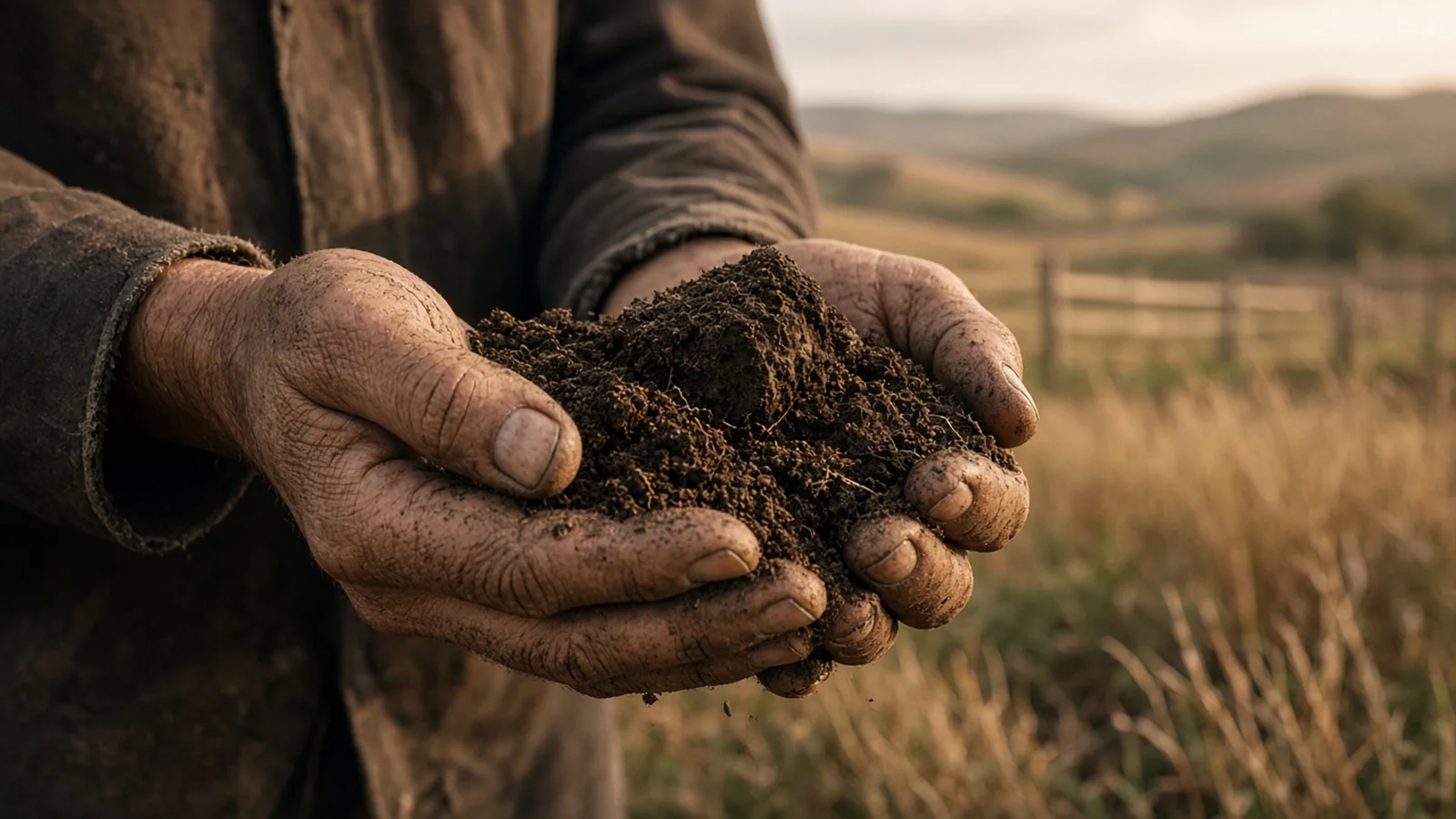
Most of what makes off-grid land work, or not, is underground. Soil decides whether a septic system will pass, whether a foundation stays dry, whether a garden thrives, and how much rain soaks in instead of running off. You can change a house. You can't easily change the soil under it.
The good news is that you can look at the soil on almost any U.S. property for free, before you make an offer. This guide shows how to use the USDA's Web Soil Survey, what to look for as a homesteader, and when to follow up with a real soil test.
What Web Soil Survey is
Web Soil Survey (WSS) is run by the USDA Natural Resources Conservation Service (NRCS). It publishes the soil maps and data produced by the National Cooperative Soil Survey. NRCS describes it as "the single authoritative source of soil survey information," with soil maps and data online for more than 95% of the nation's counties.
Two limits are worth knowing up front. Soil survey maps are made for planning, and NRCS notes that onsite investigation is needed in some cases, such as soil quality assessments and some engineering uses. A small patch of different soil can hide inside a mapped unit. Treat WSS as your first screen, not your final answer.
How to look up a property, step by step
WSS works in four tabs:
- Area of Interest. Find the parcel by address or by zooming the map, then draw a box or polygon around it. Keep it to the land you're considering.
- Soil Map. WSS outlines each soil "map unit" in your area and lists them with the share of the parcel each one covers. Click a name for its full description: depth, drainage, slope, texture and more.
- Soil Data Explorer. This is where the homesteading answers are. It rates every map unit for specific uses, from farmland classification to building sites to septic systems.
- Shopping Cart. Despite the name, it's free. Add the maps and ratings you want and download a printable PDF report to share with a septic designer, builder or lender.
What to check as a homesteader
Inside the Soil Data Explorer, these ratings matter most for an off-grid home:
- Septic tank absorption fields (under Sanitary Facilities). Shows how limited each soil is for a conventional drain field. If most of the parcel rates poorly, budget for an engineered system or plan around alternatives like a composting toilet, and confirm what your county will permit.
- Dwellings with and without basements (under Building Site Development). Flags shallow bedrock, high water tables, shrink-swell clays and flooding that make foundations harder or costlier.
- Farmland classification (under Land Classifications). Shows whether a soil is rated prime farmland, farmland of statewide importance, or neither. Useful if growing food is part of the plan.
- Depth to water table and flooding frequency (under Soil Properties and Water Features). Important for a home site, a well and a septic field alike.
- Hydrologic soil group. A rough guide to how quickly rain soaks in, which helps when you plan swales, ponds and rainwater storage.
Look at each building, septic and garden site separately. A parcel that's poor overall can still have one excellent spot, and the reverse is just as common.
Follow up with a real soil test
Web Soil Survey tells you what kind of soil is mapped. It doesn't tell you the current fertility, pH or organic matter after years of someone else's management. For that, take samples from the garden and pasture areas and send them to a lab. Most state land-grant universities run a soil testing lab or work with one through the Cooperative Extension Service, and your county Extension office can explain how to sample.
For a septic system, most counties require their own site evaluation or percolation test by a licensed professional before they issue a permit, whatever the map says.
Building soil once you own it
NRCS's soil health guidance boils down to four practices that apply to a backyard garden as much as a farm: reduce disturbance, maximize cover, promote biodiversity, and support living roots. In homestead terms, that means less tilling, keeping the ground covered with mulch or cover crops, growing a mix of plants, and keeping something growing in the soil as much of the year as you can. NRCS also offers free technical help through local USDA Service Centers, so it's worth a visit once you've bought.
What to read next
These books in our Regenerative Library go deep on building living soil:
- Teaming with Microbes by Jeff Lowenfels and Wayne Lewis, an accessible guide to the soil food web and how gardeners can work with it.
- Dirt to Soil by Gabe Brown, a North Dakota farmer's account of rebuilding degraded land with regenerative practices.
For more planning steps and expert videos, see the Land & Soil hub.
Sources
- USDA Natural Resources Conservation Service. Web Soil Survey. websoilsurvey.nrcs.usda.gov
- USDA Natural Resources Conservation Service. "Soil Health." nrcs.usda.gov